

Superdiscountmattresses
Add a reviewOverview
-
Sectors IT
-
Posted Jobs 0
Company Description
‘Incredibly Dangerous for Complimentary Speech’: DeepSeek is Giving the World a Window Into Chinese Censorship
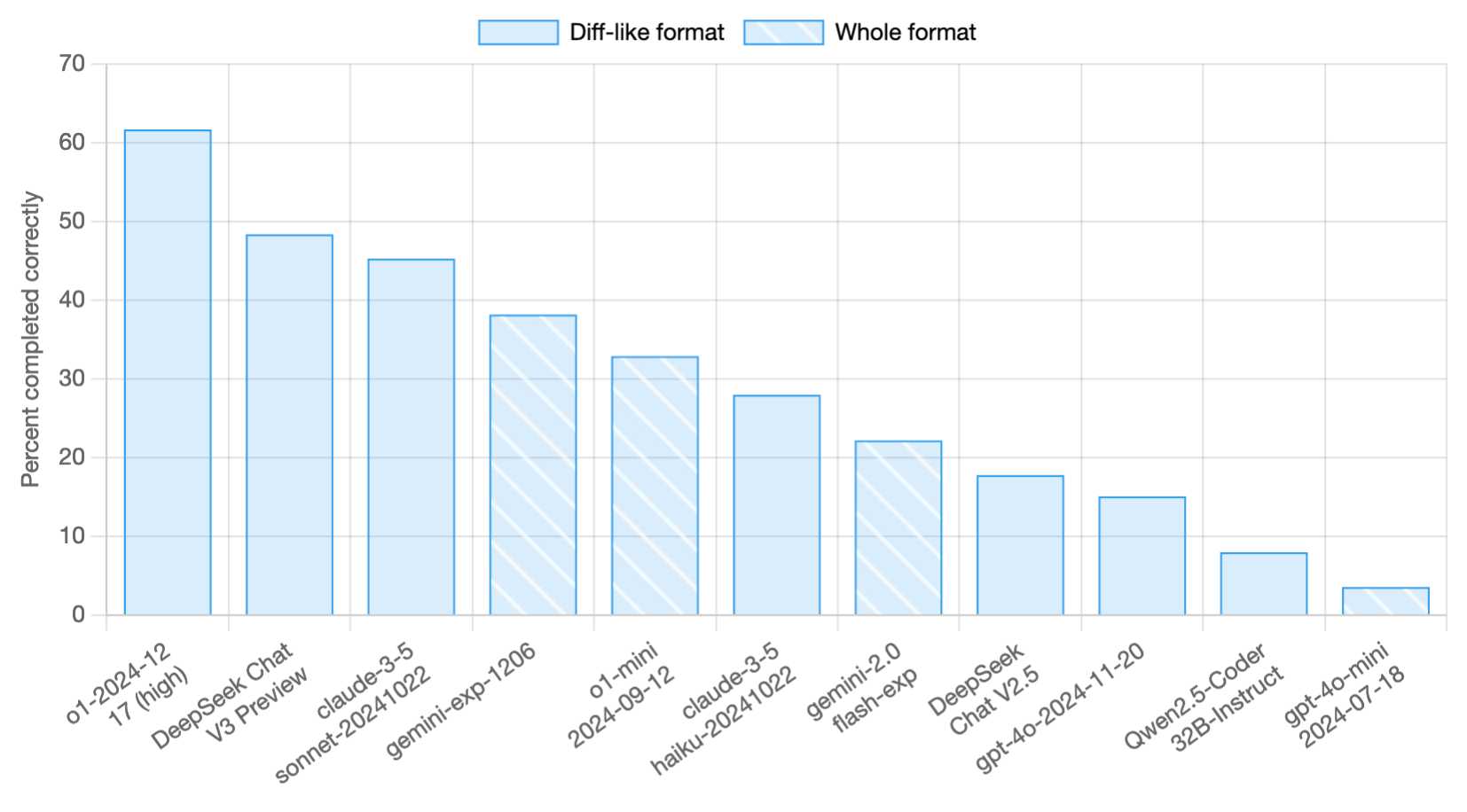
Previously little-known Chinese startup DeepSeek has dominated headings and app charts in current days thanks to its new AI chatbot, which triggered a global tech sell-off that cleaned billions off Silicon Valley’s greatest companies and shattered presumptions of America’s supremacy of the tech race.

But those signing up for the chatbot and its open-source innovation are being confronted with the Chinese Communist Party’s brand of censorship and info control.

Ask DeepSeek’s most recent AI model, revealed recently, to do things like discuss who is winning the AI race, sum up the current executive orders from the White House or inform a joke and a user will get similar responses to the ones gushed out by American-made rivals OpenAI’s GPT-4, Meta’s Llama or Google’s Gemini.
Yet when concerns divert into area that would be restricted or greatly moderated on China’s domestic web, the reactions expose aspects of the nation’s tight information controls.
Using the web on the planet’s 2nd most populated country is to cross what’s often dubbed the “Great Firewall” and go into a completely different web eco-system policed by armies of censors, where most major Western social networks and search platforms are blocked. The country consistently ranks amongst the most limiting for web and speech freedoms in reports from international guard dogs.
The global appeal of Chinese apps like TikTok and RedNote have actually currently raised national security issues among Western federal governments – in addition to questions about the possible effect to complimentary speech and Beijing’s capability to shape worldwide narratives and public viewpoint.
Now, the introduction of DeepSeek’s AI assistant – which is totally free and soared to the top of app charts in current days – raises the seriousness of those questions, observers say, and highlights the online community from which they have emerged.
‘Uncertain how to approach this kind of question’
One example of a question DeepSeek’s brand-new bot, utilizing its R1 design, will answer in a different way than a Western competitor? The Tiananmen Square massacre on June 4, 1989, when the Chinese federal government extremely split down on trainee protesters in Beijing and across the country, eliminating hundreds if not countless students in the capital, according to estimates from rights groups.
Chinese authorities have so completely suppressed discussion of the massacre in the years because that many individuals in China mature never ever having actually found out about it. A search for ‘what happened on June 4, 1989 in Beijing’ on significant Chinese online search platform Baidu turns up short articles keeping in mind that June 4 is the 155th day in the Gregorian calendar or a link to a state media article keeping in mind authorities that year “quelled counter-revolutionary riots” – with no reference of Tiananmen.
When the same question is put to DeepSeek’s latest AI assistant, it begins to offer a response detailing a few of the events, consisting of a “military crackdown,” before removing it and replying that it’s “unsure how to approach this kind of question yet.” “Let’s chat about math, coding and reasoning issues rather,” it states. When asked the very same question in Chinese, the app is quicker – immediately asking forgiveness for not understanding how to address.
It’s a similar patten when asking the R1 bot – DeepSeek’s latest model – “what occurred in Hong Kong in 2019,” when the city was rocked by pro-democracy demonstrations. First it offers a detailed overview of events with a conclusion that a minimum of during one test noted – as Western observers have – that Beijing’s subsequent imposition of a Law on the city caused a “substantial erosion of civil liberties.” But rapidly after or amid its response, the bot eliminates its own response and recommends talking about something else.
Related post China celebrates DeepSeek’s breakout AI success as tech race warms up
DeepSeek’s V3 bot, launched late in 2015 weeks prior to R1, returns various responses, consisting of ones that appear to rely more heavily on China’s main position.
When asked about its sources, DeepSeek’s R1 bot said it used a “diverse dataset of publicly available texts,” consisting of both Chinese state media and international sources. “Critical thinking and cross-referencing remain key when browsing politically charged subjects,” it said. CNN has approached the company for remark.
Controlling the narrative?
Observers say that these differences have significant ramifications totally free speech and the shaping of worldwide popular opinion. That spotlights another measurement of the battle for tech dominance: who gets to manage the narrative on major global issues, and history itself.
An audit by US-based info dependability analytics firm NewsGuard released Wednesday said DeepSeek’s older V3 chatbot design stopped working to offer accurate information about news and info topics 83% of the time, ranking it connected for 10th out of 11 in comparison to its leading Western competitors. It’s unclear how the more recent R1 accumulates, however.
DeepSeek becoming an international AI leader could have “devastating” effects, said China expert Isaac Stone Fish.
“It would be exceptionally harmful free of charge speech and totally free thought internationally, since it hives off the capability to think freely, artistically and, oftentimes, properly about one of the most important entities worldwide, which is China,” stated Fish, who is the founder of service intelligence company Strategy Risks.
That’s because the app, when asked about the country or its leaders, “present China like the utopian Communist state that has actually never ever existed and will never ever exist,” he added.
In mainland China, the ruling Chinese Communist Party has supreme authority over what details and images can and can not be shown – part of their iron-fisted efforts to maintain control over society and suppress all kinds of dissent. And tech business like DeepSeek have no option but to follow the rules.
Related article Why DeepSeek could mark a turning point for Silicon Valley on AI
Because the innovation was established in China, its design is going to be gathering more China-centric or pro-China information than a Western company, a truth which will likely affect the platform, according to Aaron Snoswell, a senior research fellow in AI responsibility at the Queensland University of Technology Generative AI Lab.
The company itself, like all AI companies, will also set different rules to trigger set responses when words or topics that the platform doesn’t wish to go over emerge, Snoswell stated, pointing to examples like Tiananmen Square.
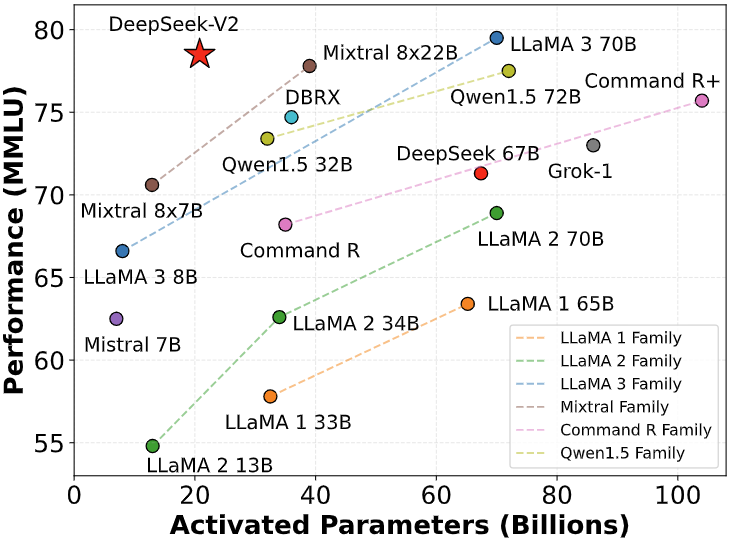
In addition, AI business frequently utilize employees to assist train the model in what kinds of subjects might be taboo or all right to go over and where specific boundaries are, a process called “reinforcement knowing from human feedback” that DeepSeek stated in a research paper it used.
“That implies somebody in DeepSeek composed a policy file that states, ‘here are the topics that are okay and here are the subjects that are not fine.’ They considered that to their employees … and then that behavior would have been embedded into the design,” he said.
US AI chatbots also normally have criteria – for instance ChatGPT will not inform a user how to make a bomb or fabricate a 3D weapon, and they normally utilize systems like reinforcement finding out to create guardrails against hate speech, for instance.
“That’s how every other company makes these designs behave much better,” Snoswell said.

“But it’s just that in this case, chances are that a Chinese company embedded (China’s authorities) values into their policy.”
Security concerns
There have likewise been concerns raised about potential security risks connected to DeepSeek’s platform, which the White House on Tuesday said it was examining for nationwide security implications.
Concerns about American information being in the hands of Chinese companies is currently a hot button problem in Washington, sustaining the debate over social media app TikTok. The app’s Chinese parent company ByteDance is being needed by law to divest TikTok’s American service, though the enforcement of this was paused by Trump.
Unlike TikTok, which states as of July 2022 it stores all American data in the US, DeepSeek says in its personal privacy policy that personal info it gathers is kept in “secure servers located in individuals’s Republic of China.”
A contrast of personal privacy policies between DeepSeek and some of its US competitors also show worrying distinctions, according to Snoswell.
Each DeepSeek, OpenAI and Meta say they collect individuals’s information such as from their account information, activities on the platforms and the devices they’re using. But DeepSeek includes that it also gathers “keystroke patterns or rhythms,” which can be as uniquely determining as a finger print or facial acknowledgment and utilized a biometric.
“I have actually never seen another software platform that states they gather that unless it’s developed for (those functions),” Snoswell said. He likewise noted what appeared to be vaguely defined allowances for sharing of user data to entities within DeepSeek’s corporate group.
